
Patellofemoral Pain Syndrome (PFPS)
Patellofemoral Pain Syndrome, which is often referred to as “runner’s knee,” is one of the most common causes of knee pain. It is especially common among active individuals, but PFPS can impact anyone who regularly loads the knee joint.
PFPS is typically characterized by pain around or behind the kneecap (patella), where it articulates with the femur (thigh bone). This is known as the patellofemoral joint. This joint plays a crucial role in knee mechanics, helping to distribute forces during movement. When something disrupts how the patella tracks along the femur, irritation and pain can develop.
One of the key features of PFPS is a diffuse, non-specific pain in the front of the knee. People often describe discomfort during activities like running, descending stairs, or squatting. The pain may worsen with repetitive loading of the joint, particularly when the knee is bent under load.
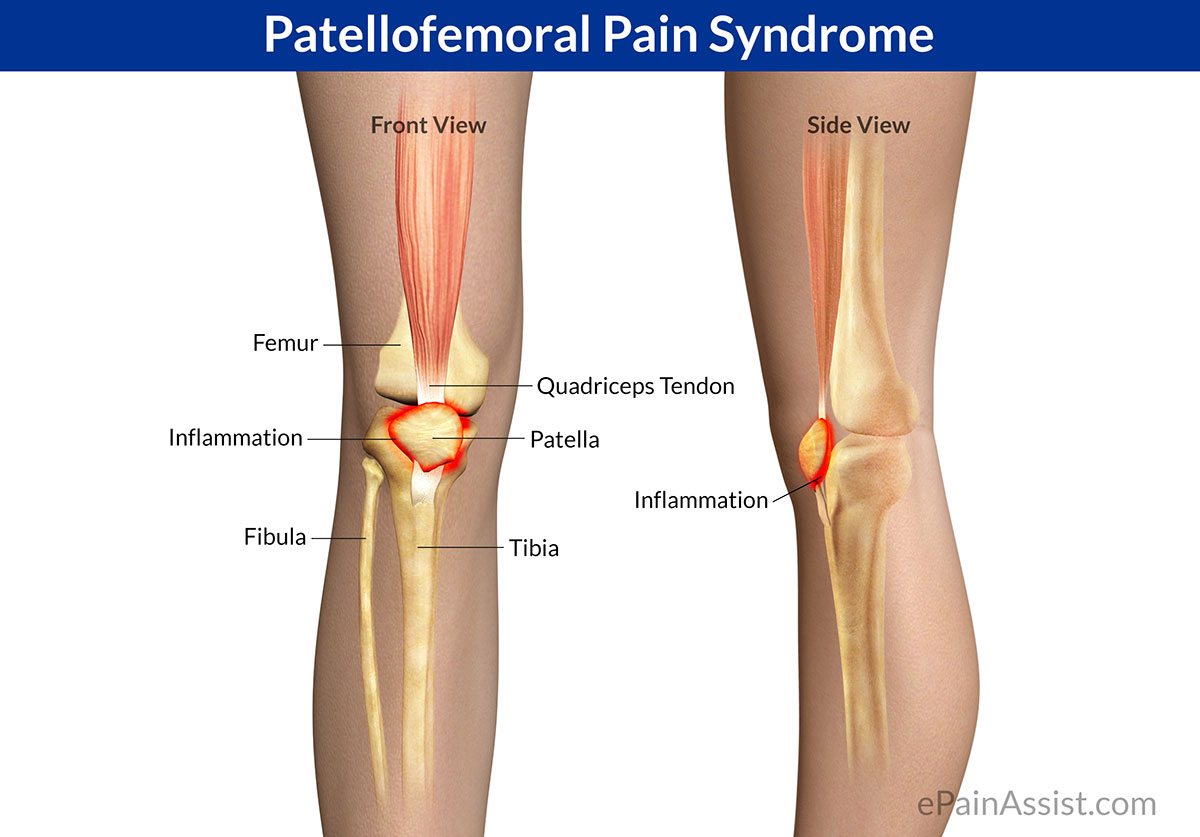
It is important to note that there isn’t one single cause of PFPS. It is considered a multifactorial condition, with a major contributing factor being poor patellar tracking. Ideally, the patella glides smoothly within a groove on the femur as the knee bends and straightens. However, muscle imbalances, altered biomechanics, or structural variations can cause the patella to shift slightly off course, increasing stress on surrounding tissues.
How our muscles function during movement play a significant role here. “Weakness” or delayed activation of muscles like the vastus medialis oblique (VMO) can reduce the ability to stabilize the patella. At the same time, tightness in structures like the tensor fasciae latae (TFL) and vastus lateralis, can pull the patella outward, further contributing to discomfort.
Hip and foot mechanics are equally important for this condition but are often overlooked during assessment. Altered gait, foot instability, or weakness in the hip abductors and external rotators can lead to an inward collapse of the knee during movement. This altered alignment changes how forces are distributed through the patellofemoral joint, increasing stress and potentially triggering pain. More often than not, PFPS is not just a knee problem, but a whole lower-limb issue.
Training errors are another common contributor. Rapid increases in activity intensity, or frequency can overload the patellofemoral joint before the tissues have time to adapt. This is particularly common in runners who suddenly increase mileage or incorporate more hills and speed work without proper progression.
When it comes to management, the focus should be on addressing the root causes rather than simply masking symptoms. This is where a targeted, individualized approach becomes important! Athletic therapy can help identify contributing factors and guide appropriate exercise selection, movement retraining, and activity modification to reduce pain and get you back to doing what you love!
-Jaymie Grove, CAT(C)
There’s more to your feet than you might realize. These small structures support your entire body weight as your only point of contact with the ground during walking, running, or hiking. They also serve as the base upon which your whole body organizes itself during dynamic movement. What many people overlook is that feet are designed to be dynamic—they absorb shock, adapt to uneven terrain, and return energy efficiently through their arches.
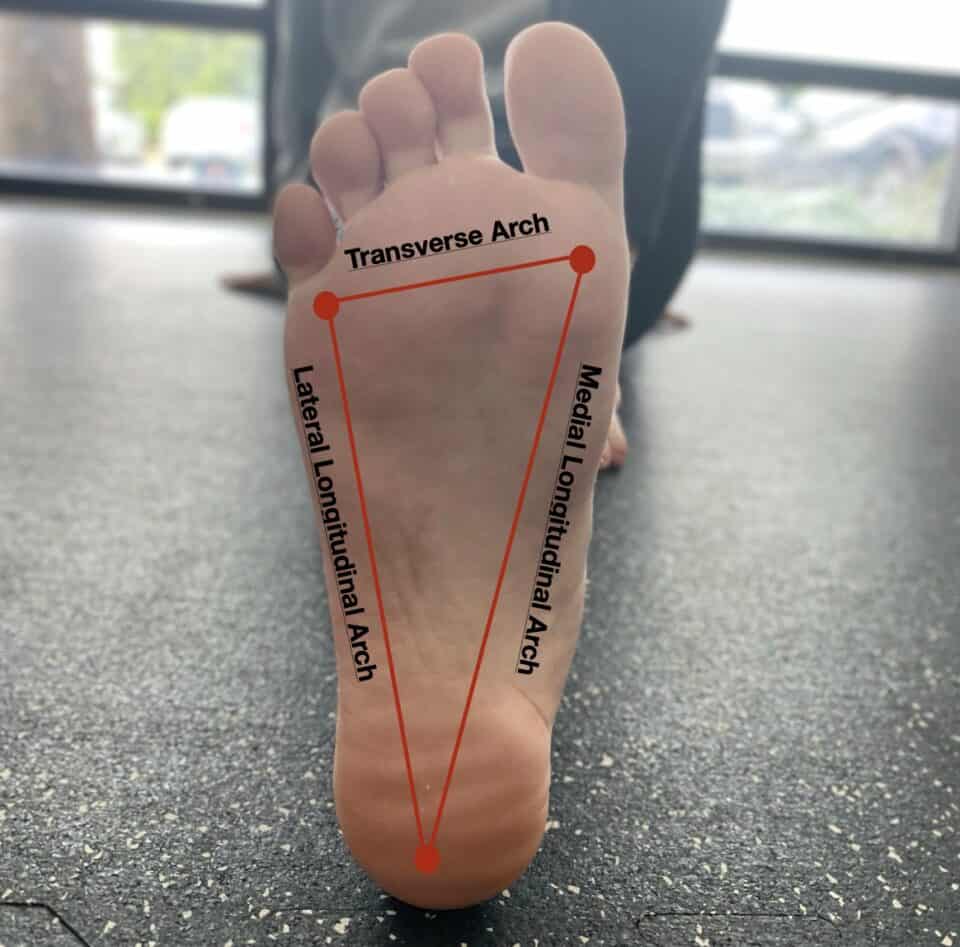
Most know there’s at least one arch in the foot, but there are actually three interconnected arches:
–The Medial longitudinal arch: along the inner side, acting as the primary shock absorber. Supported by the tibialis posterior tendon
–The Lateral longitudinal arch: outer side, providing lateral stability
–The Transverse arch: across the forefoot, aiding push-off
These arches are engineered to be both strong and flexible, functioning like springs that flatten under load and stiffen for propulsion.
So how does this play out in movement?
Consider a typical step in gait. It begins with heel strike, where your heel contacts the ground and your foot starts to pronate (a natural inward roll for shock absorption—not a flaw, as many believe). During mid-stance, as your knee bends and your body weight shifts over the foot, the arches collapse slightly—this increases the foot’s contact area for stability while dissipating impact forces (up to 2-3 times body weight; Bolgla & Malone, 2004). Then, in the push-off phase, big toe extension activates the windlass mechanism: the plantar fascia tightens, elevating the arches and making the foot rigid to propel you forward efficiently (Hicks, 1954; Bolgla & Malone, 2004).
For this cycle to work smoothly, the intrinsic foot muscles (like the abductor hallucis) and lower leg muscles must be strong enough to control the arches. Weakness here can lead to excessive collapse, stressing the knees, hips, or lower back up the chain. A common misconception is that ‘flat feet’ are inherently problematic—they’re often just under-trained (Sichting & Ebrecht, 2021). Strengthening these muscles through targeted exercises can help restore dynamic balance. Using minimally supportive footwear or going barefoot during short walks can further train these muscles, promoting resilience and reducing injury risk.
Try it!
Next time you have a moment, test this yourself. Stand in a split stance (one foot slightly ahead) and slowly bend your front knee. Does the arch collapse during the bend and re-emerge as you straighten? This simple check offers insight into your foot’s dynamic function.
Your feet work tirelessly every day—strengthening their arches supports better movement overall, especially for demanding activities like hiking or running. If pain persists or your test reveals asymmetry, consider a professional assessment for tailored guidance.
- Kestrel Martin, Kinesiology
Citations
Hicks, J. H. (1954). The mechanics of the foot. II. The plantar aponeurosis and the arch. Journal of Anatomy, 88(Pt 1), 25–30. https://pmc.ncbi.nlm.nih.gov/articles/PMC1244640/[pmc.ncbi.nlm.nih]
Bolgla, L. A., & Malone, T. R. (2004). Plantar fasciitis and the windlass mechanism: A narrative review. Sports Health, 1(3), 224–229. https://pmc.ncbi.nlm.nih.gov/articles/PMC385265/[pmc.ncbi.nlm.nih]
Sichting, F., & Ebrecht, F. (2021). The rise of the longitudinal arch when sitting, standing, and walking: Contributions of the windlass mechanism. PLoS ONE, 16(4), Article e0249965. https://doi.org/10.1371/journal.pone.0249965[journals.plos]
When people talk about movement, they often use the words flexibility and mobility as if they mean the same thing. However, though these terms are closely related, they are not interchangeable. Understanding the difference between the two can make a big impact on your ability to move pain-free in daily life, your overall injury risk, and your performance on the court, field, trails, or wherever you enjoy moving your body!
What’s the difference?
Flexibility is your body’s ability to move passively through a range of motion. That means something external—gravity, the floor, or even another person—is helping you. For example, when you bend forward and try to touch your toes, you’re relying on flexibility in your hamstrings and low back. You’re letting gravity pull you into position without much muscular effort.
Mobility, on the other hand, is your body’s ability to actively control movement through a range of motion. If you bend forward and pick up something heavy off the ground, your muscles are activated, coordinating to support your joints in that position. Mobility means strength and control, not just range.
Imagine it this way:
-Flexibility is the potential.
-Mobility is the usable strength within that potential.
Why does Mobility matter?
Mobility isn’t just for athletes – it’s important for anyone who wants to move well and stay healthy! Here are just a few of the benefits:
- Better injury prevention: Mobility training enhances muscle activation at the limits of joint range, protecting joints, ligaments, and soft tissues from strain. Improved control reduces compensatory movements and muscle imbalances that often lead to injuries, enhancing joint stability and coordination to lower the risk of overuse injuries, strains, and chronic pain.
- Increased Functional strength: Mobility develops strength across the entire joint range, particularly at the vulnerable end ranges frequently encountered in daily tasks. It promotes coordinated activation of both prime movers and stabilizers, supporting efficient and pain-free movement during activities like lifting, reaching, and bending.
- Performance edge: For athletes, mobility improves movement efficiency and power by optimizing joint mechanics, reducing friction, and enhancing neuromuscular control.
This results in smoother force production through the full range of motion, enabling faster, stronger, and more coordinated movements.
Flexibility still matters too…
Does this mean flexibility isn’t important? Not at all. Flexibility provides the necessary foundation by allowing your muscles to lengthen and your joints to move through their basic range. Without adequate flexibility, you simply can’t reach or hold certain positions comfortably. However, flexibility alone isn’t enough—if your muscles can’t control those ranges, the risk of injury actually increases. Think of flexibility as the first step: it sets the stage, but mobility builds on that foundation by adding strength, control, and coordination for reliable, pain-free movement.
The Takeaway
Mobility is the foundation of strong, safe, and efficient movement. While flexibility allows you to reach positions, mobility gives you the strength and control to move confidently within them. Developing true mobility takes time and consistent effort, but the benefits are lasting: better performance, fewer injuries, and greater ease in everyday activities. Prioritize mobility training alongside flexibility, and your body will thank you with improved resilience and movement quality.
To support your journey, consider visiting Momentum and joining one of our upcoming classes or workshops!
-Kestrel, Kinesiology student
When we think about our body’s movements, ribs don’t usually cross our mind. But believe it or not, rib movement plays a huge role in how we breathe, move, and even stay pain-free!
There are three main types of rib movements:
- Pump Handle Movement – The upper ribs lift and widen at the front, helping you inhale.
- Bucket Handle Movement – The sides of your lower ribs move outwards, expanding your chest and creating space for air.
- Caliper Movement – This happens when the ribs spread apart, especially in the lowest part of your rib cage. It’s not an obvious movement, but it still plays a big role in breathing.

Why Does Rib Movement Matter?
- Breathing: Effective rib movement is essential for deep, full breaths. When your ribs aren’t moving properly, it can limit airflow and result in shallow breathing, which may leave your muscles feeling tight and fatigued.
- Posture: Restricted rib movement can negatively affect your posture, leading to discomfort or pain in various areas of the body. When the ribs can’t move freely, the muscles and joints around the spine may be forced to compensate.
- Pain Relief: Maintaining proper rib mobility can alleviate pain in the body and help support the spine, distributing pressure more evenly and reducing strain on surrounding muscles and joints.
Want to keep your ribs happy? Stretch, move, and breathe deeply! Your body will thank you.
-Jaymie, Certified Athletic Therapist CAT(C)
You are passionate about gardening, but bending, lifting, and repetitive motions can sometimes lead to sore muscles—or even injuries, please keep reading. We’re going to get into the top 3 ways to prevent injury from gardening.
With the snow melting and garden beds poking out in the backyard, we are all super excited to get back into the garden. It goes without saying that jumping right into moving dirt, tilling, digging etc, should be eased into. Please, please, please, don’t jump off the cozy winter couch and jump into a full day of garden chores! I would advise to slowly ramp up the intensity and time as the spring season allows. I’m not going to get into too much detail here (we will in the 3-part Feel Good: Gardening Series at the end of April though!), but I do want to provide you with some tips that I found over the years have helped me decrease my muscle soreness and prevent injury, aches and pains:
Dress warm.
In early spring, we are super keen to get out a move around the garden. Remember – it’s still spring! Dress appropriately by keeping your core (heart and lungs) warm. With either a vest or base layers. This helps keep your circulatory system pumping warm around your whole body! Another vey important area to keep warm to prevent injury is your arms! Grabbing the shovel, trowel, rake – you need your wrist and forearms. Long sleeves and proper gardening gloves will go a long way. But I have an amazing ‘hack’ from back in my tree planting days: cut off the foot of an old pair of wool sock and use a wrist warmers.
Strength & mobility.
This is super important no matter what activity you are performing. Depending on what needs to be done in the garden, you need to lift, reach, pull, build, bend over, climb, etc. In the upcoming Feel Good: Gardening Series we will break down all these common motions performed in the garden and strengthen into them. If I can continue with an action step that you can do now, is start getting strong: complete some body weight squats, dead lifts, overhead presses, pulls and pushes.
Proper mechanics and form: No reaching.
I’m thinking of some of my first tasks in the garden: raking, pulling old plants, digging, tilling. One thing that comes to mind to prevent an especially sore back and shoulders is to NOT REACH. For example when raking, keep a stable ‘ready stance’ and perform smaller rakes towards you. If you start reaching to get a ‘maximum’ range, I will suspect that you will be putting pressure into your low back and shoulders. Create a smaller working space, move your feet more to get in a better position to complete shorter rakes. You’ll actually do a better job too 😛. Same goes for pulling old plants. Don’t reach across the bed, get nice and close to the plant, make sure your footing is stable and then give it a yank!

-Kerri, Certified Athletic Therapist CAT(C)
Join me 🙂
I hope these few tips can help you get motivated in injury prevention for the upcoming gardening season! If you are interested in joining the Feel Good: Gardening Series to help prevent injuries, I am hosting 2 cohorts starting in April.
Evening cohort on Tuesdays at 5pm: April 22, April 29 and May 6
Daytime cohort on Thursdays at 12noon: April 24, May 1 and May 8
Click here to sign up or email us: hello@momentumtherapyandmovement.ca

What’s an Athletic Therapist?
An athletic therapist specializes in the prevention, assessment, and rehabilitation of musculoskeletal injuries, focusing on your muscles, joints, and ligaments. Whether you are recovering from a sports injury or dealing with everyday aches and pains, they’re here to help. Athletic therapists are the go-to professionals for active individuals, whether you’re an athlete or simply someone who enjoys staying active and needs help recovering from both acute and chronic injuries. They use a combination of manual therapy, tailored exercise programs, and functional rehabilitation to get you back to the activities you love.
What’s a Physiotherapist?
Physiotherapists treat a broad range of conditions, addressing everything from musculoskeletal issues to neurological concerns such as stroke recovery and even respiratory problems. Using a mix of manual therapy, exercise-based treatments, and various thermal and electrical modalities, physiotherapists work to improve your movement, reduce pain, and enhance overall function, to help you feel and move better in the long run.
What’s a Chiropractor?
Chiropractors specialize in diagnosing and treating musculoskeletal conditions with a particular focus on manual manipulation techniques. By performing these adjustments, they aim to restore proper alignment, to enhance healing and optimize the body’s natural function. With a hands-on approach to treatment, chiropractors work to alleviate discomfort and improve overall mobility to help you feel better and move more freely.
Book a class or an appointment here with an Athletic Therapist at Momentum Therapy & Movement
Looking at the joints in the body, every other joint is predominantly built for either mobility or stability. This is an important concept to understand when you are looking at the body as a whole.
All joints have the capacity of both stability and mobility. But each joints predominant function is either one or the other.
Predominately mobile jointsare multidirectional and have lots of range of motion. They go in many different directions for example the hip joint does: Flexion, extension, adduction, abduction, internal rotation and external rotation.
Predominately stable joints have 2 main directions. For example the knee does flexion and extension really well.
If you lose mobility in a joint, another area in the body will have to pick up the slack. And same for if you lose stability in a stable joint, another area in the body will be forced to pick up the slack. If a joint is doing it’s job and the job of another, this will be a great spot for an injury to occur.
 Mobility / Stability Skeleton